
Douglas County Arrest Warrants Explained
The DCSO Warrants Unit describes an arrest warrant as a judge's order telling officers to bring a named person before the court. A criminal investigation often starts the process, and a judge must first find probable cause. When checking a possible Douglas County warrant, confirm the person's identity, the issuing court, the charge, and the current status.
Douglas County Probable-Cause Chain
Under Colorado §16-3-108, an officer swears out an affidavit with facts showing an offense occurred and that a particular person committed it. Douglas County adds its own steps through DCSO policy.
- An officer reviews the facts and drafts the affidavit.
- A supervisor and the 23rd Judicial District Attorney review it.
- A judge decides whether to sign.
- The clerk assigns a case number.
- Records enters the warrant in the proper system.
Once the judge signs, the Clerk of Court opens the case file. DCSO Records then receives the warrant and affidavit, enters the record into CCIC, and logs service later. This path separates an arrest warrant from a bench warrant, which flows from a missed court duty rather than sworn probable-cause facts. Policy B-103 took effect November 4, 2025 and layers supervisor, prosecutor, judge, clerk, and Records reviews into a local audit trail. That is why a docket entry alone shows only part of Douglas County's complete record.
Inside a Douglas County Arrest Warrant
The record combines the order with identification, service, and court data.
| Case | Number, type, date, judge |
|---|---|
| Identity | Name, birth date, confirmation descriptors |
| Basis | Charge and probable-cause source |
| Custody | Bond and transport limits |
| Status | Active, served, recalled, or cleared by arrest |
Protected fields may be withheld from a public copy.
New Douglas County Felony Warrant Lag
DCSO policy allows 24 to 72 hours before a new felony warrant becomes law-enforcement-owned. Douglas County screens can disagree during that window. No safe period exists for the person named.
Key point: a blank public result means not confirmed, not no warrant. Call the issuing court, DCSO, or counsel.
Felony warrants generally need confirmation from the originating agency. Older misdemeanor, traffic, and municipal records in Douglas County may require teletype confirmation, while CICJIS warrants stand valid on their face. During the handoff, the court and Records systems can sit at different stages. Sealed, juvenile, and protected investigation records add their own limits.
Serving Arrest Warrants in Douglas County
DCSO serves warrants from Douglas County courts, patrolling unincorporated areas, Castle Pines, and Larkspur. City police handle their own jurisdictions. The county publishes no public arrest-warrant database, so courts and originating agencies confirm live status.
Douglas County Warrant Confirmation Systems
CCIC and CICJIS serve justice agencies, not the public. DCSO sorts Douglas County warrants into pre-CICJIS misdemeanor, traffic, and municipal cases, felony cases, CICJIS cases, and Denver County Court warrants, several of which require originating-agency confirmation.
- CCIC
- Colorado's criminal-information network.
- CICJIS
- The court-to-justice information route.
- Active
- Open for service.
- Cleared by arrest
- Served and updated through custody.
Municipal courts do not participate in CICJIS.
Comparing Douglas County Court Orders
These records start in different ways.
| Order | Trigger | Effect |
|---|---|---|
| Arrest warrant | Probable cause | Authorizes custody |
| Summons | Charge or citation | Directs appearance |
| Bench warrant | Missed duty | Returns case to court |
A docket label alone may not explain the underlying trigger. Ask the clerk.
Douglas County Booking and Bond
After service, DCSO may book the person, and the case moves to court. A warrant can state its own bond, and stacked cases can mean several bonds at once. If the order sets a no-bond hold, only a judge can change it. The DCSO bonding page explains personal-recognizance, cash, surety, and property bonds. DCSO accepts bond 24 hours a day; booking help is 303-660-7550, and Access Corrections takes phone or online posting at 866-345-1884. The rights notice adds that fees are never release conditions on a money bond. Remember that bond secures release but does not dismiss a charge or recall another warrant. Terms turn on the current charges, history, and flight risk, so ask DCSO or counsel about the specific order rather than assuming a general amount.
If There's an Arrest Warrant for You
Call the court or an attorney before you walk in. Ask whether your Douglas County case fits planned surrender, a hearing, a motion, or bond. Felony, violent, protection-order, probation, and out-of-state matters all call for counsel.
Act safely: DCSO never demands gift cards or phone payment instead of arrest. Do not negotiate through a wanted page or approach another person.
DCSO does not promise a pre-arrest walk-in for every case. Its First Appearance Center route covers common missed-traffic matters, not every felony arrest warrant. Before appearing in Douglas County, gather photo ID, court notices, the case number, and bond information. Counsel can reach the prosecutor and clerk, explain the likely custody steps, and arrange a lawful appearance where permitted. Nothing promises that a lawyer prevents arrest or that every voluntary appearance ends in release. After court or booking, ask how to verify service, recall, quash, or clearance in both the court record and the agency record. A payment, an email, or a filed motion does not prove the judge withdrew the order.
Federal Arrest Warrants Use Separate Channels
Federal matters run outside the Douglas County system. The District of Colorado PACER page routes federal docket searches, though PACER is not a warrant roster and sealed matters stay hidden. The U.S. Marshals District of Colorado handles federal service, and DCSO joins the Colorado Violent Offender Task Force. The official PACER service is the federal case-search channel.
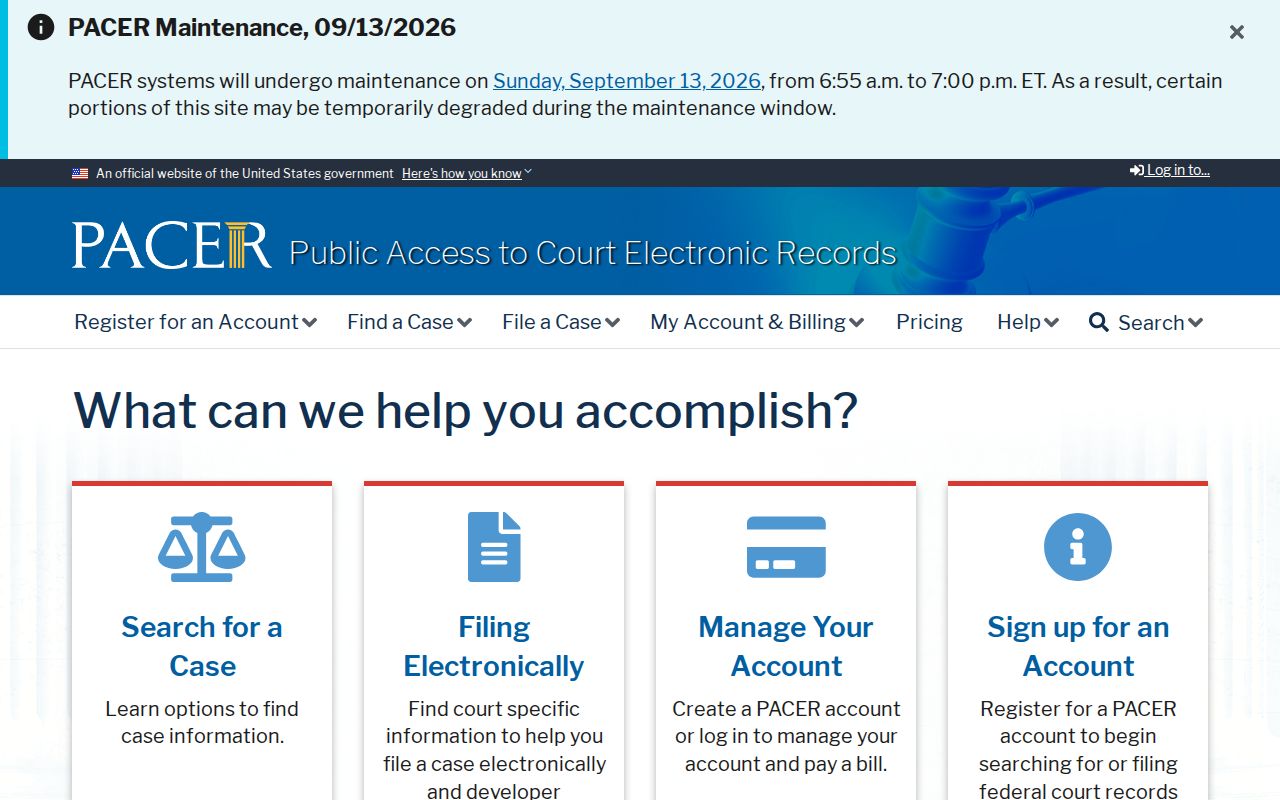
The PACER interface finds public federal docket events, but it cannot expose a sealed warrant or replace confirmation from the federal court. It can help distinguish a complaint, an indictment, a summons, an arrest warrant, and later orders. Sealed indictments and warrants remain unavailable, and public criminal filings redact personal identifiers. The Marshals Service lists Denver at 303-728-7800 and its Colorado task force at 303-728-7830. Neither contact replaces the federal clerk or defense counsel. A missing federal docket does not prove no warrant exists. Federal service, court records, and surrender planning sit apart from Douglas County Combined Courts, and PACER fees buy docket access only, never bond or relief in a local case. Before any travel, confirm the court, the sealed-record limits, and a lawful appearance plan with federal counsel.
Douglas County Arrest Record Access
Douglas County arrest records sit in a few different hands, so knowing which office holds the file saves time. The state docket is the place to find scheduled hearings. It is a calendar, not a warrant registry. Still, it can show an appearance on arrest warrant, an appearance on bond, an arraignment date, the location, and the courtroom, which helps you reach the right clerk fast. The clerk keeps the actual file. For a state case, that means the Clerk of Court at Douglas County Combined Courts, who can also tell you which division handles the matter. Court research requests go to DouglasRecords@judicial.state.co.us. Sheriff records are separate. DCSO Records answers questions at 303-660-7545 and takes focused CJRA requests online, in person at the Justice Center or the Highlands Ranch Substation, and by mail. When you search, use the case number if you have it. Pair a name with a birth date and court details. Then confirm the current order with the clerk directly. A good request names the case, the incident, the booking number, the date, the place, the parties, and the exact document you want, so far as you know them. DCSO contacts the requester within three business days to verify receipt. Expect possible fees. Research, retrieval, and redaction can run $41.37 per hour, with an estimate and advance payment required first. One caution worth repeating. Paying a copy fee buys the record, not freedom from the warrant itself. CORA, CJRA, CJD 05-01, sealing orders, and juvenile rules can all limit what gets released. If protected facts come back redacted, ask the Douglas County court only for the public status and the next required event. And remember that an old docket printout, a missing most-wanted entry, or an absent municipal result cannot establish that a Douglas County arrest warrant has ended.